The Man Considered to Be the Father of Film Art
Blitheness is one of the near ubiquitous and all-permeating forms of visual communication today, seen everywhere from the multitude of TV channels defended solely to cartoons to the title sequences of our favorite movies to the reactive graphic interfaces our smartphones. And while virtually of united states of america have a vague idea of how, when, and where it all began, nosotros tend to take for granted the incredible visual wizardry possible today. With that in mind, hither's a brief history of the honey medium'south beginnings through the seminal piece of work of five early animation pioneers.
1. COHL: FANTASMAGORIE (1908)
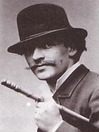 French cartoonist and animator Émile Cohl is frequently referred to as "the father of the blithe drawing." The legend goes that in in 1907, when motion pictures were reaching disquisitional mass, the fifty-year-quondam Cohl was walking downward the street and spotted a affiche for a picture clearly stolen from i of his comic strips. He confronted the manager of the offending studio, Gaumont, in outrage and was hired on the spot as a scenarist—the person generating one-page story ideas for movies. Between Feb and May 1908, Cohl created Fantasmagorie, considered the commencement fully animated film ever fabricated.
To create the animation, Cohl placed each drawing on an illuminated drinking glass plate and traced the adjacent cartoon, reflecting the variations necessary to show movement, over it until he had some 700 drawings. Since chalkboard caricaturists were mutual vaudeville attractions in the era, the characters in the picture await as though they've been fatigued on a chalkboard, but it'southward an illusion—Cohl filmed black lines on newspaper and printed them in negative to make his animations appear to be chalk drawings.
Fantasmagorie and dozens of other influential early on films can exist establish on Gaumont Treasures Vol. ii: 1908-1916, with over 10 hours of glorious raw material.
2. MÉLIÈS: THE PROLIFIC EGG (1902)
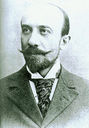 French filmmaker Georges Méliès is known as the first cinemagician for his early use of special effects in cinema. Between 1896 and 1914, he directed some 531 films, ranging from i to 40 minutes in length, ordinarily featuring single in-camera effects throughout each entire film. In 1902, he appeared in one of his own films, fifty'oeuf du sorcier (The Prolific Egg)—a groundbreaking exploration of calibration, multiplication, and transitions that truly sealed his reputation as a "cinemagician" and the father of special effects in moving picture.
Méliès'due south seminal work can be found in Georges Méliès: Kickoff Sorcerer of Movie theater (1896-1913), an outstanding five-disc collection of 173 rare and rediscovered Méliès gems alongside a beautifully illustrated booklet featuring essays by acclaimed National Moving-picture show Board of Canada animator Norman McLaren, and its sequel, Méliès Encore: 26 Boosted Rare and Original Films past the Get-go Sorcerer of Cinema (1896-1911).
3. MCCAY: LITTLE NEMO (1911)
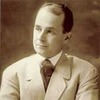 Cartoonist and artist Winsor McCay (1869-1964) is often considered ane of the fathers of "true" animation.
His 1911 film, Winsor McCay, the Famous Cartoonist of the N.Y. Herald and His Moving Comics, besides referred to but equally Petty Nemo and featured here last week, contains two minutes of pure animation at around eight:11, using sequential hand-illustration in a novel style not seen in previous films.
For more on McCay'southward work and legacy, look no further than the stunning and illuminating Winsor McCay: His Life and Art. At that place's also a wonderful Kickstarter project out to resurrect McCay'southward terminal film, The Flying House—bring together me in supporting it.
iv. BLACKTON: THE ENCHANTED DRAWING (1900)
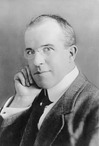 British filmmaker J. Stuart Blackton is credited with creating the get-go animation in America and was among the first in the world to use stop-movement as a storytelling technique. In 1896, Blackton, a reporter for the New York Evening Globe, was sent to interview Thomas Edison about his make new Vitascope invention. In an historic period where wooing reporters was critical to success, Edison took Blackton to Black Maria, his studio-cabin, and created an impromptu movie of Blackton doing a lightning sketch of Edison himself. Blackton became so infatuated with the technology that he shortly founded the American Vitagraph Company and began producing films, debuting with The Enchanted Drawing in 1900.
In the motion-picture show, previously featured here, Blackton sketches a face up, cigars, and a bottle of wine, then "removes" these last drawings as real objects so that the face appears to react. Although the stop-motion sequence isn't considered "true" animation in technical terms the way Little Nemo, which Blackton co-directed with McCay, is, the technique offered an early glimpse of what blitheness could become.
Blackton's films are included in The Origins of American Animation, 1900-1921—a fantastic collection of the work that sparked what became 1 of the most powerful and permeating movements in visual creativity.
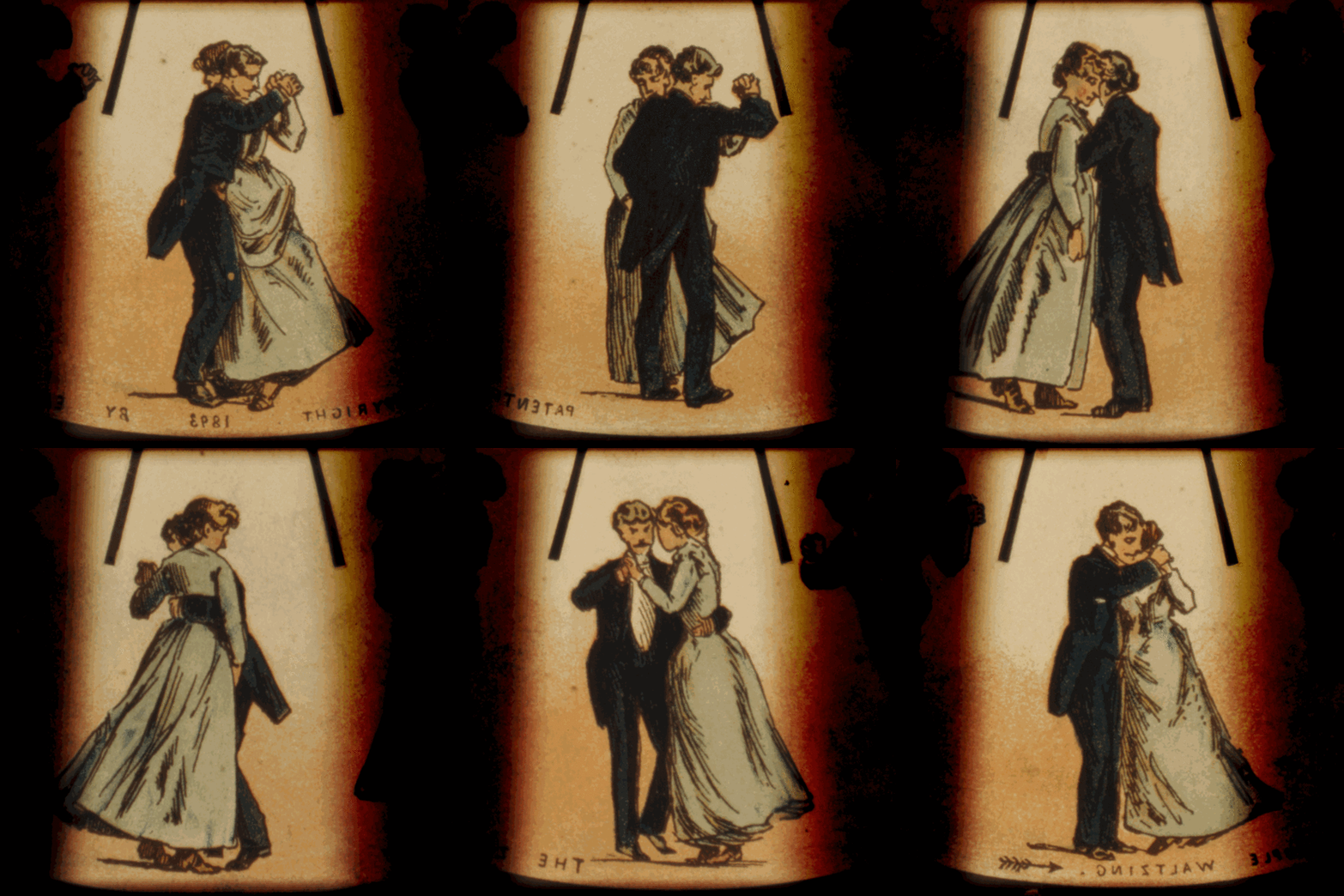
5. MUYBRIDGE: WALTZING COUPLE (1893)
Though the work of English language photographer Eadweard J. Muybridge isn't animation, his animal locomotion studies are among the primeval visual experiments with moving images, laying the foundations for later forms of videography.
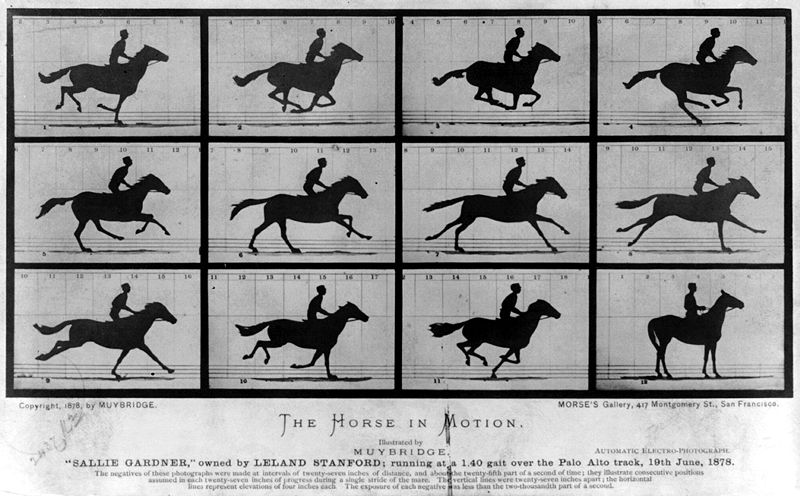
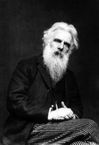 In 1872, the Governor of California took a public position on a usually debated question of the era: When a equus caballus gallops, are all four of its hooves off the ground simultaneously? Most paintings of galloping horses at the time showed the front end legs extended forwards and the rear legs extended backwards, so Governor Stanford sided with the "unsupported transit" theory and took it upon himself to prove it scientifically. He hired Muybridge to settle the question, who enlisted a series of large cameras using drinking glass plates placed in a line, each triggered by a thread as the equus caballus passed. He paired that with a clockwork device. The images were then copied as silhouettes onto a disc, later viewed on a zoopraxiscope. In 1877, Muybridge finally settled Stanford's question with a single photographic negative showing Stanford's racehorse, Occident, fully airborne in the midst of a gallop.
In 1893, Muybridge used the phenakistoscope—an early animation device that harnessed the "persistence of vision" principle to create an illusion of motility—to extend his visual studies to animation.
Hans-Christian Adams offers an splendid account of Muybridge's piece of work and legacy in Eadweard Muybridge: The Human being and Brute Locomotion Photographs, all-time examined in parallel with the work of Muybridge's equally influential French gimmicky, Étienne-Jules Marey.
For more on early on animation, you won't go incorrect with Donald Crafton'south Earlier Mickey—the almost ambitious history of blitheness from 1898-1928 always published.
This postal service also appears on Brain Pickings.
sandovalyestioured.blogspot.com
Source: https://www.theatlantic.com/entertainment/archive/2011/07/before-walt-disney-5-pioneers-of-early-animation/241448/
0 Response to "The Man Considered to Be the Father of Film Art"
Post a Comment